20 Boho Kitchen Ideas to Create a Warm, Free-Spirited Home
There is something deeply comforting about a boho kitchen — a space that feels soulful, relaxed, and layered with textures and colors that spark creativity the moment you walk in. In a world that feels increasingly fast and structured, the bohemian kitchen becomes a sanctuary that embraces imperfection and celebrates individuality.
With warm tones, earthy materials, and meaningful decor pieces, this style blends comfort with expression in the most effortless way. Whether you live in an apartment, a small home, or a spacious open-concept layout, boho design fits beautifully because it is more about feeling than formality.
It welcomes collected pieces, personal stories, and natural elements that create a warm, free-spirited atmosphere. If you have always dreamed of a kitchen that feels lived-in, loved, and uniquely yours, these ideas will guide you toward building a space full of warmth and personality.
Also read: 20 Kitchen Island Ideas
The Heart of Boho Style
Bohemian design thrives on visual comfort — a mix of soft textures, natural fibers, and contrast that feels unpolished yet intentional. What makes a boho kitchen so charming is that it looks like it evolved over time.
You’re not trying to match everything perfectly; instead, you’re layering elements that inspire you. Botanical prints, wood finishes, handmade ceramics, woven details, and soft ambient lighting all infuse the kitchen with character.
This style also champions sustainability by reusing vintage furniture, incorporating natural materials, and displaying handcrafted items that hold emotional value. It’s a design that lets your personality shine louder than trends — while still looking Pinterest-trendy and aesthetically beautiful.
Also read: 20 Trendy Earthy Kitchen Ideas
Why Boho Kitchens Are Increasingly Popular
Many homeowners are moving away from sterile, minimal kitchens and leaning toward spaces that feel warm and intimate. Boho kitchens meet that need with open shelving, earthy palettes, patterned tiles, and unexpected decor that feels inviting.
They’re forgiving, practical, and deeply aesthetic — perfect for anyone who enjoys cooking, gathering, or simply appreciating a calm, visually rich environment. The boho look also adapts beautifully to any color scheme: warm neutrals for a grounded feel, desert shades for a southwestern influence, or bold jewel tones for an eclectic twist. Whether subtle or expressive, a boho kitchen creates an environment where slow living and creativity thrive.
Also read: 15 Two-Tone Kitchen Cabinet
Quick Overview Table
| Element | Boho Style Examples |
|---|---|
| Materials | Rattan, wicker, jute, raw wood, handmade pottery |
| Colors | Warm neutrals, earthy terracotta, muted greens, deep blues |
| Patterns | Moroccan tile, vintage rugs, ethnic prints |
| Decor | Plants, baskets, textured lighting, pottery |
| Mood | Relaxed, natural, layered, soulful |
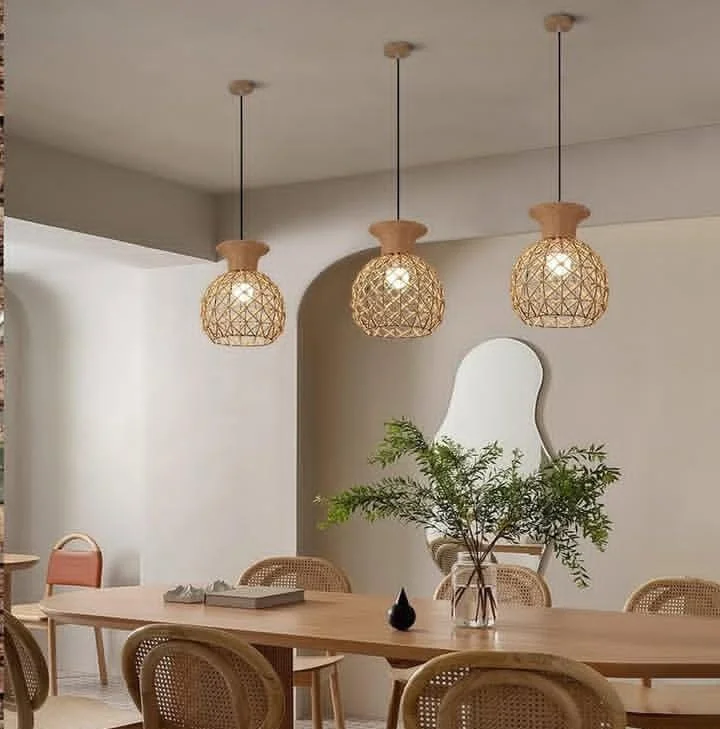
1. Rattan Pendant Lighting Over the Kitchen Island
Materials Needed
- Rattan or wicker pendant light fixture
- Pendant cord kit
- Ceiling hook and mounting hardware
- LED warm-tone bulb
- Ladder
- Wire connectors
- Measuring tape
Step-by-Step Decorating Instructions
- Begin by selecting a rattan pendant shade in a shape that complements your kitchen island.
- Turn off the power supply to the ceiling fixture to ensure a safe installation process.
- Remove any existing light fixture, keeping the wiring exposed and ready for reconnection.
- Assemble the pendant cord kit according to the manufacturer’s directions.
- Attach the mounting bracket to the ceiling electrical box for secure hanging.
- Thread the rattan pendant onto the cord and adjust the hanging height to match your island’s proportions.
- Use a measuring tape to ensure the pendant hangs centrally and at an even distance from the countertop.
- Connect the wires using wire connectors, matching each color correctly.
- Secure the canopy to the ceiling, ensuring the fixture is firmly in place.
- Install a warm LED bulb with a soft, ambient glow.
- Turn on the power and test the lighting adjustment.
- If needed, shorten or lengthen the cord for a balanced look.
- Add additional rattan pendants if your island is long for a more dramatic boho touch.
- Style the island with wooden bowls or natural accessories to complement the texture.
- Step back and check how the rattan’s warmth interacts with your kitchen’s existing tones.
Aesthetic, Mood, or Functional Benefits
Rattan pendants bring earthy warmth and instantly set a relaxed, bohemian mood. Their texture softens modern cabinetry and adds depth without overwhelming the space. The warm lighting creates a cozy ambiance ideal for cooking or gathering. Rattan also pairs beautifully with natural elements like stone counters or raw wood shelves. This simple upgrade transforms the island into a soft focal point. It reinforces the free-spirited, lived-in feeling that defines boho design.
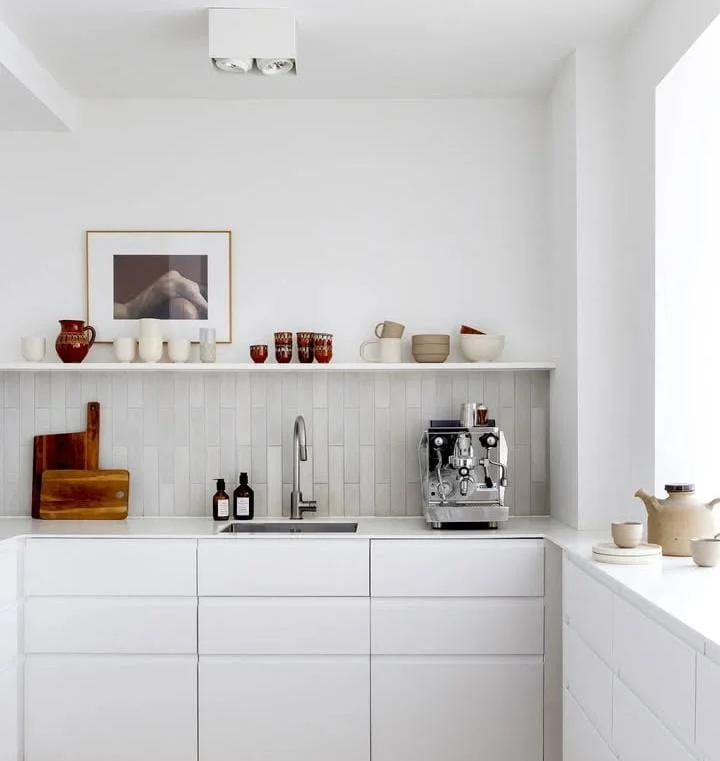
2. Open Shelving Styled with Handmade Ceramics
Materials Needed
- Wooden floating shelves
- Heavy-duty shelf brackets
- Drill and anchors
- Handmade ceramic plates, mugs, and bowls
- Small trailing plants
- Decorative jars or spice containers
- Level
Step-by-Step Decorating Instructions
- Begin by measuring the wall area where the shelves will be installed.
- Mark the positions for brackets using a pencil and a level to maintain alignment.
- Drill holes for the anchors and secure the brackets tightly into the wall.
- Place the wooden shelves onto the brackets and ensure they sit evenly.
- Start styling by placing the largest ceramic pieces first — bowls or wide plates.
- Add mugs and smaller ceramics to create layered height and variation.
- Incorporate small green plants to soften the display and add freshness.
- Use decorative jars for spices or dry goods to add a practical yet aesthetic touch.
- Avoid overloading the shelf to maintain a breathable boho look.
- Arrange pieces in groups of threes for visual balance.
- Mix colors, but keep within an earthy palette to maintain cohesion.
- Step back frequently to adjust the rhythm of the arrangement.
- Add woven baskets if extra storage is needed at the ends.
- Ensure everything feels collected and organic, not too perfect.
- Clean the shelves after styling to remove dust and fingerprints.
Aesthetic, Mood, or Functional Benefits
Open shelves let you showcase handmade ceramics, bringing warmth and authenticity into the kitchen. The natural imperfections of pottery add character and make the space feel personal and artistic. Plants and textured jars enhance the boho aesthetic effortlessly. This setup also keeps daily essentials accessible while functioning as decor. The overall look is layered, soft, and inviting. It creates a relaxed, “lived-in but curated” atmosphere.
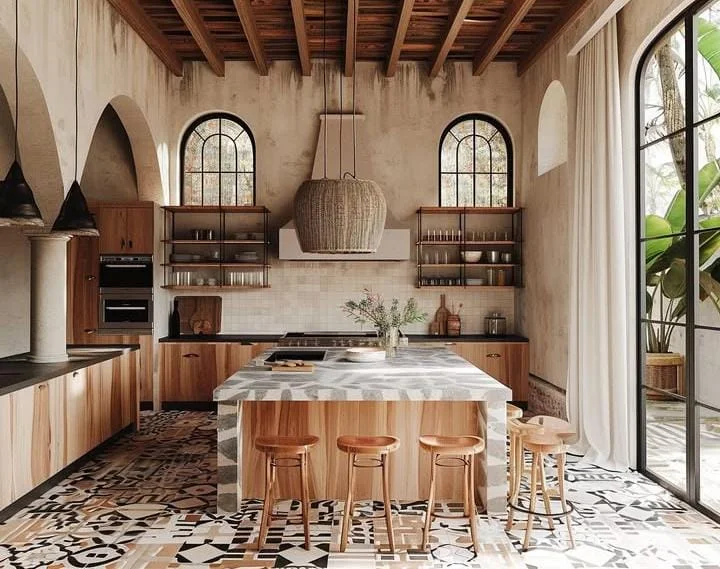
3. Patterned Moroccan Backsplash for Boho Color
Materials Needed
- Moroccan tile sheets or peel-and-stick tiles
- Tile adhesive
- Grout
- Tile cutter
- Sponge and bucket
- Level
- Painter’s tape
Step-by-Step Decorating Instructions
- Clear your backsplash area and wipe the wall clean of grease or debris.
- Use painter’s tape to mark the boundaries of the backsplash layout.
- Position the first tile sheet at the center of the wall for symmetrical alignment.
- Spread tile adhesive evenly using a trowel, covering small sections at a time.
- Press the Moroccan tile sheets firmly into the adhesive, using a level for accuracy.
- Cut tiles as needed around outlets or edges with a tile cutter.
- Allow adhesive to set based on product instructions.
- Mix grout and apply it across the tiles using a rubber float.
- Use a damp sponge to wipe off excess grout while keeping the tile pattern clean.
- Let the grout cure fully, checking for any missed spots.
- Install outlet covers back onto the wall.
- Step back and examine the visual flow of the pattern.
- Add under-cabinet lighting to highlight the intricate design.
- Style the counter with wooden utensils to balance the vibrant tiles.
- Clean the surface gently and enjoy the new focal point.
Aesthetic, Mood, or Functional Benefits
Moroccan tiles bring boho vibrancy through color and pattern. Their intricate motifs add cultural richness and instantly elevate a plain kitchen. The design introduces energy while still feeling artisanal and grounded. The backsplash becomes a stunning focal point that defines the kitchen’s personality. Its visual warmth pairs beautifully with rustic wood or rattan accents. This upgrade makes the kitchen feel artistic, joyful, and globally inspired.
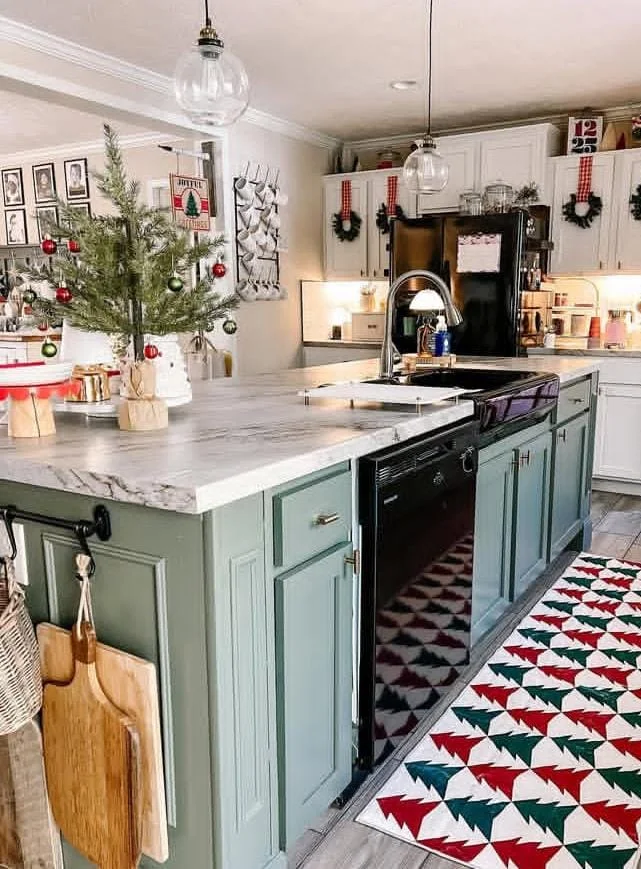
4. Vintage Runner Rug for a Warm, Lived-In Feel
Materials Needed
- Vintage or distressed-style runner rug
- Rug pad or anti-slip mat
- Measuring tape
- Vacuum cleaner
- Mild cleaner for spot treatment
- Soft-bristle brush
Step-by-Step Decorating Instructions
- Start by measuring the walkway area in your kitchen where the runner rug will go.
- Choose a rug with earthy tones, geometric patterns, or faded colors that complement boho aesthetics.
- Place the rug pad on the floor first to prevent slipping and protect the rug’s fibers.
- Roll out the runner rug slowly, aligning it with the walkway’s center.
- Press the rug down evenly to avoid bumps or folds.
- If edges curl, place books or weights overnight to flatten them.
- Vacuum the rug thoroughly to remove any loose fibers or dust.
- Add a light mist of fabric refresher for a fresh scent if needed.
- Check that cabinet doors or appliances open smoothly without catching the rug.
- Ensure the rug extends the full length of the walkway for visual flow.
- Add soft lighting around the area to enhance the rug’s colors and pattern.
- Pair it with wooden or rattan elements for visual harmony.
- Keep a small brush nearby for quick dust cleanup.
- Spot-clean any spills using a mild cleaner.
- Step back and view the rug from multiple angles to ensure balance with the overall design.
Benefits
A vintage runner rug instantly adds warmth and a lived-in texture to a boho kitchen. The patterns introduce personality while softening hard flooring. The rug also helps define the cooking zone visually. It brings comfort underfoot during long cooking sessions. The worn-in look complements boho’s collected, organic feel. This simple addition transforms the kitchen into a cozy, soulful space.
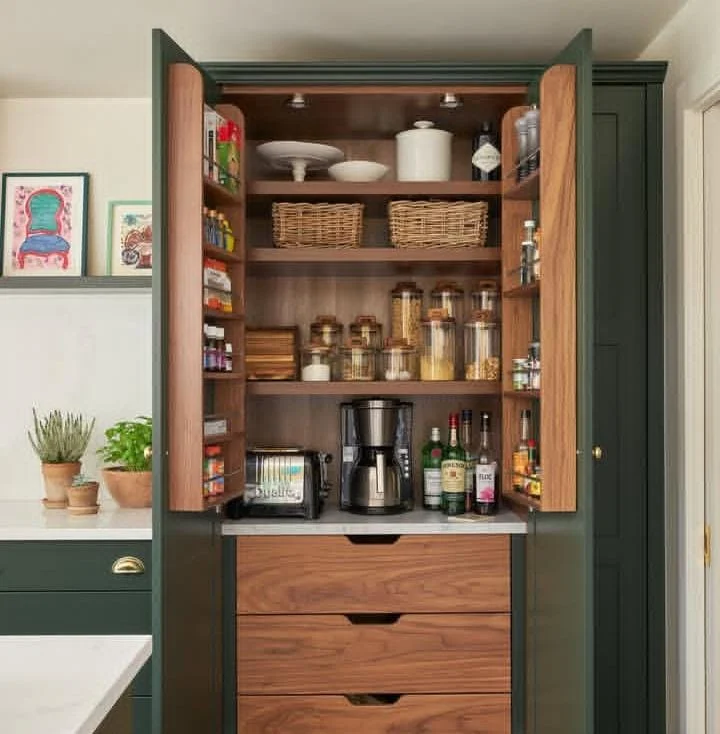
5. Wooden Open Pantry Shelving with Baskets
Materials Needed
- Thick wooden boards
- Heavy-duty wall brackets
- Woven or jute storage baskets
- Drill and screws
- Level
- Labels (optional)
Step-by-Step Decorating Instructions
- Measure the pantry area to decide how many shelves you need and their spacing.
- Choose natural wood planks with visible grain to enhance boho warmth.
- Install brackets evenly using a level to avoid uneven shelving.
- Secure the shelves firmly into the brackets.
- Place your baskets on the shelves to check spacing and fit.
- Organize pantry items into categories such as grains, snacks, or spices.
- Store frequently used items at eye level for easy access.
- Add labels if you prefer a tidy yet aesthetic look.
- Include a small plant on one shelf for a natural touch.
- Mix a few ceramic jars to break up the basket textures.
- Keep colors neutral for a cohesive boho flow.
- Add dried herbs bundled with twine for earthy decor.
- Ensure the layout remains airy and not overcrowded.
- Wipe shelves weekly to maintain cleanliness.
- Step back and adjust any overcrowded spots for visual balance.
Benefits
This shelving setup creates a functional yet stylish boho pantry. Baskets bring natural fiber warmth while keeping clutter hidden. The open shelves make everyday items accessible. Wood adds grounding earthiness to the kitchen. This design encourages minimalism without sacrificing charm. It turns pantry storage into decor.
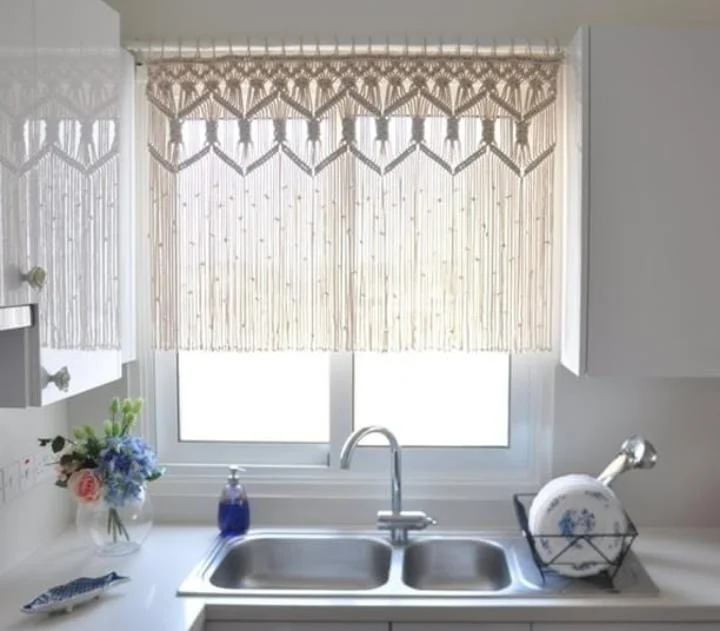
6. Boho Macramé Window Curtain
Materials Needed
- Macramé curtain or handmade macramé panel
- Curtain rod
- Rod brackets
- Drill and screws
- Measuring tape
- Step stool
Step-by-Step Decorating Instructions
- Measure your kitchen window to determine the curtain size.
- Choose a macramé design with long knots, fringes, or geometric patterns.
- Install the curtain rod brackets evenly above the window.
- Slide the macramé panel onto the rod.
- Lift the rod and secure it into the brackets.
- Adjust the macramé strands for symmetry and flow.
- Let some sunlight filter through the knots to soften the room.
- Trim uneven fringes carefully if needed.
- Add trailing plants on each side of the window for a boho frame.
- Style the window sill with wooden or ceramic pieces.
- Ensure the curtain does not touch stove areas for safety.
- Shake the curtain gently to remove dust.
- Handwash the macramé occasionally to maintain texture.
- Re-knot small frays if they appear.
- View the curtain from afar to check for balanced movement.
Benefits
Macramé brings artisanal charm and bohemian personality to the kitchen. It filters sunlight beautifully, creating warm, patterned shadows. It softens sharp edges and adds visual interest. The handmade quality aligns perfectly with boho authenticity. It complements natural materials like wood and pottery. This feature enhances serenity and artistic appeal in the space.
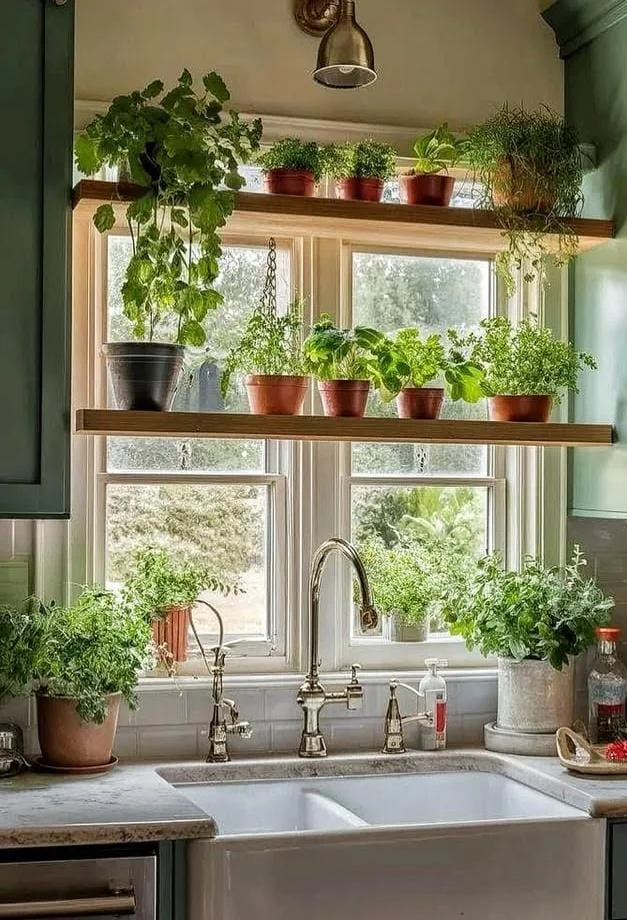
7. Terracotta Pots Filled with Fresh Herbs
Materials Needed
- Terracotta pots in various sizes
- Herb plants (basil, mint, rosemary, cilantro)
- Potting soil
- Pebbles for drainage
- Watering can
- Small tray or shelf
Step-by-Step Decorating Instructions
- Select terracotta pots with earthy tones that match your kitchen palette.
- Add a layer of pebbles at the bottom for drainage.
- Fill each pot with high-quality potting soil.
- Plant herbs gently and pat soil around roots.
- Place the pots on a window sill or a small shelf.
- Water lightly to avoid over-soaking the roots.
- Rotate the pots weekly for even sunlight exposure.
- Wipe excess soil from the pot’s exterior for a clean look.
- Add small labels or wooden markers for organization.
- Group pots in clusters to create a boho-style green corner.
- Mix pot sizes for visual layering.
- Add a woven tray underneath for a cohesive setup.
- Trim herbs regularly to keep them healthy.
- Replace any weak plants as needed.
- Enjoy their aroma as they freshen the kitchen naturally.
Benefits
Terracotta pots bring earthy warmth and organic texture to a boho kitchen. Fresh herbs add life, color, and fragrance. The setup encourages natural living and sustainability. It enhances the kitchen’s artisanal, cottage-like atmosphere. The greenery softens hard surfaces while improving air quality. This idea combines beauty with practical cooking benefits.
8. Distressed Wood Kitchen Island
Materials Needed
- Reclaimed or distressed wood slab
- Sandpaper
- Wood sealant
- Screws and brackets
- Stain (optional)
- Power drill
Step-by-Step Decorating Instructions
- Start by choosing a wood slab with character marks like knots or texture.
- Sand the surface lightly to smooth rough patches.
- Apply a sealant to protect the wood while keeping its rustic look.
- Decide whether you want a stained or natural finish.
- Mount the slab onto your existing island base.
- Secure with brackets underneath for stability.
- Add hooks or rattan baskets under the island for extra storage.
- Style the top with ceramics, candles, or fruit bowls.
- Ensure the wood remains the focal point by using minimal decor.
- Wipe the surface gently and avoid harsh cleaners.
- Add woven stools for a cohesive boho look.
- Keep lighting warm to highlight the wood grain.
- Check the stability of the slab periodically.
- Re-seal if necessary every few months.
- Enjoy the rustic charm it brings to your kitchen.
Benefits
A distressed wood island adds warmth and timeless character. It enhances boho’s natural, grounded aesthetic. The imperfections add authenticity and artistic flair. It becomes a central gathering spot with tactile appeal. The wood texture softens modern appliances. This design brings soulful charm to your cooking environment.
9. Hanging Pot Rack with Woven Baskets
Materials Needed
- Metal or wooden pot rack
- Ceiling hooks
- Chains or cord
- Woven baskets
- Copper or vintage pots
- Measuring tape
Step-by-Step Decorating Instructions
- Measure the height above the island or stove for proper placement.
- Choose a pot rack that matches your kitchen’s style—wood for warmth, metal for contrast.
- Install ceiling hooks into joists for secure support.
- Hang the pot rack with chains or sturdy cord.
- Arrange pots by size and weight for safety.
- Add woven baskets on the rack for boho texture.
- Store utensils or herbs inside the baskets.
- Keep similar colors grouped for visual harmony.
- Ensure nothing hangs too low to obstruct movement.
- Clean pots before hanging for a polished look.
- Add a small plant hanging beside the rack.
- Adjust levels to avoid clutter.
- Test the rack’s weight distribution.
- Style the area underneath minimally.
- Enjoy your artistic, functional display.
Benefits
A hanging pot rack adds height, depth, and artisan charm to the kitchen. It celebrates functional decor — a core boho principle. Woven baskets introduce natural fibers that soften the overall look. It frees cabinet space and keeps cookware accessible. The display becomes a statement feature. This idea enhances both beauty and practicality.
10. Boho Tiered Hanging Basket Storage
Materials Needed
- Three woven rattan or jute baskets (different sizes)
- Natural cotton rope or macrame cord
- Ceiling hook or wall-mounted bracket
- Small metal rings
- Scissors
- Tape measure
- Drill (if installing a ceiling hook)
Step-by-Step Instructions
- Begin by selecting three baskets that coordinate in color but have slightly different shapes for a relaxed, collected look.
- Cut three long lengths of cotton rope, ensuring they are at least twice the height of your planned hanging structure.
- Tie the ends of the ropes together, securing a metal ring at the top to act as the main suspension point.
- Separate the ropes and thread each one evenly through the rim of the top basket, spacing them equally so the basket hangs level.
- Tie firm knots beneath the rim to lock the top basket into place.
- Measure about 12–15 inches of rope below the first basket, then repeat the threading and knotting process with the second basket.
- Ensure each basket is balanced before tightening the knots.
- Repeat again for the third basket, leaving enough rope below for an optional decorative tassel.
- Trim the ends of the rope neatly or brush out the fibers for a soft fringe.
- Install a ceiling hook or sturdy wall bracket using a drill if needed.
- Hang the tiered basket piece and gently adjust the ropes so each basket sits level.
- Style the baskets with produce, linens, or herbs—avoid overloading to maintain shape.
- Step back and ensure the baskets create a vertical line that draws the eye upward.
- Adjust knot tightness if any basket begins to tilt.
- Keep the style loose and organic, embracing the asymmetry that makes boho design feel natural.
Benefits
- Adds vertical texture, perfect for small kitchens with limited counter space.
- Brings in organic fibers that instantly warm the atmosphere.
- A practical storage system that doubles as hanging art.
- Encourages a slow-living aesthetic with visible produce and natural materials.
- Makes the kitchen feel airy and curated rather than cluttered.
- Adds height and movement to the room without requiring remodels.
11. Eclectic Open Shelving with Mixed Ceramics
Materials Needed
- Wooden open shelves (light or medium stain)
- Stud finder and level
- Ceramic plates, bowls, and mugs in mixed patterns
- Vintage jars, greenery, and small decor pieces
- Shelf brackets
- Screws and drill
- Soft cloth for styling
Step-by-Step Instructions
- Choose a stretch of wall where open shelves will be both functional and visually pleasing.
- Use a stud finder to mark secure mounting points and hold the shelf in place to determine the final height.
- Attach brackets using a drill, ensuring each one is level so the shelf doesn’t tilt under weight.
- Place the wooden shelf onto the brackets and secure it with screws.
- Wipe the shelf clean to remove dust before placing decor.
- Start styling from the back outward: larger plates, tall jars, or pitchers anchor the look.
- Layer ceramics in a gentle gradient of colors—terra cotta, cream, amber, and muted blues blend beautifully in boho kitchens.
- Add handmade pieces or items with imperfections; they highlight the charm of an eclectic collection.
- Balance functional pieces (bowls, mugs) with decorative accents like a trailing plant or wooden bead garland.
- Create small clusters but avoid overcrowding—leave pockets of negative space.
- Place a few natural elements, such as dried flowers or carved spoons, for warmth.
- Step back and adjust heights to create a soft zigzag visual flow.
- Rotate seasonal ceramics for a refresh without changing the layout.
- Maintain harmony through tone while allowing mix-and-match patterns to shine.
- Wipe down shelves weekly to keep dust from building up on exposed items.
Benefits
- Open shelves allow personality to shine through curated collections.
- Mixed ceramics soften the kitchen and make it feel lived-in.
- Encourages a cozy, welcoming environment rather than a polished showroom style.
- Easier to access everyday dishes, adding convenience and charm.
- Makes small kitchens feel larger by eliminating bulky cabinet fronts.
- Offers endless seasonal styling flexibility with minimal cost.
12. Handwoven Jute Rug Runner with Layered Textures
Materials Needed
- Long jute or braided cotton runner
- Non-slip rug pad
- Smaller patterned boho rug (optional)
- Scissors
- Vacuum
- Fabric protector spray
Step-by-Step Instructions
- Measure your kitchen walkway to determine the ideal runner length.
- Unroll your jute runner and place a non-slip pad underneath, trimming to size.
- Smooth the runner flat, ensuring both ends align neatly with your cabinet line.
- If layering, position a smaller patterned rug at an angle over the jute for contrast.
- Press the smaller rug down firmly so it doesn’t slide.
- Test walk the area to make sure the layered rugs sit securely.
- Shake out both rugs outdoors to release any loose fibers.
- Apply a light coat of fabric protector to extend durability.
- Vacuum weekly using a brushless setting to avoid fraying.
- Rotate the rug every few months to prevent uneven wear.
- For added detail, tuck the edges slightly beneath toe-kicks to soften transitions.
- If layering multiple rugs, ensure clashing patterns are balanced by neutral tones.
- Keep heavy appliances away from the rug edges to avoid creasing.
- Add a floor stool nearby to amplify the laid-back bohemian vibe.
- Sweep underneath periodically to prevent buildup of crumbs or dust.
Benefits
- Adds warmth and texture to floor areas that often feel cold and bare.
- Jute pairs beautifully with boho décor, grounding the space naturally.
- Layered rugs create dimension without overwhelming the kitchen.
- Softens long walkways and makes cooking more comfortable.
- Works well in minimalist or colorful boho themes alike.
- Easy to switch out seasonally for a fresh mood.
13. Boho Herb Corner with Rustic Pots
Materials Needed
- Terracotta pots or reclaimed clay containers
- Potting soil
- Herb seedlings (basil, mint, rosemary, thyme)
- Wooden tray or woven basket
- Labels or wooden markers
- Watering can
- Small pruning shears
Step-by-Step Instructions
- Select a corner of your kitchen that receives indirect sunlight.
- Fill terracotta pots with potting soil, leaving room for roots to settle.
- Plant one herb per pot to allow each variety space to grow.
- Water lightly and let excess moisture drain thoroughly.
- Arrange pots on a rustic wooden tray to keep the look cohesive.
- Add wooden markers with handwritten labels for charm.
- Place taller herbs in the back and trailing ones in the front.
- Rotate pots every few days for even growth.
- Use your herbs frequently to encourage healthy regrowth.
- Mist occasionally if the air in your kitchen is dry.
- Keep shears nearby for quick trimming during meal prep.
- Add a small woven basket beside the tray to hold gardening tools.
- Replace plants seasonally to keep the display fresh.
- Add a tiny ceramic pitcher or candle beside the tray for extra warmth.
- Avoid direct heat sources like stoves or ovens to prevent wilting.
Benefits
- Fresh herbs introduce organic fragrance and color.
- Terracotta containers complement boho’s earthy palette.
- Encourages slow living and mindful cooking practices.
- Creates a natural focal point without heavy décor.
- Simple to maintain and endlessly customizable.
- Adds a rustic Mediterranean touch that suits boho kitchens perfectly.
14. Rattan Bar Stools with Soft Cushions
Materials Needed
- Rattan or cane bar stools
- Cotton or linen cushions
- Velcro strips or ties
- Wood polish or conditioning oil
- Measuring tape
- Soft cloth
Step-by-Step Instructions
- Measure the height of your kitchen island to choose stools that allow comfortable legroom.
- Place the stools near natural light to check how the rattan tones look in your home.
- Wipe each stool with a soft cloth and apply conditioning oil if the rattan looks dry.
- Choose cotton or linen cushions in earthy tones.
- Attach cushions using Velcro strips or ties so they stay in place.
- Test the seat for comfort and adjust cushion thickness if needed.
- Style the stools slightly rotated to create a relaxed, unforced layout.
- Add a small throw draped over one stool for soft texture.
- Check stool stability regularly, tightening screws as needed.
- Keep stools away from direct high heat to prevent rattan cracking.
- Vacuum the underside occasionally to remove dust trapped in the weaving.
- If your island is long, space stools generously to avoid clutter.
- Add a nearby basket to store extra cushions or linens.
- Consider a footrest bar for comfort.
- Replace cushions seasonally for different boho color palettes.
Benefits
- Rattan instantly warms the kitchen and adds boho character.
- Cushioned seats increase comfort for long chats or meal prep sessions.
- Lightweight stools make rearranging easy.
- Works well with both colorful and neutral boho kitchens.
- Adds texture without overwhelming the space.
15. Hand-Painted Boho Backsplash Tiles
Materials Needed
- Plain ceramic tiles (matte or glossy)
- Tile primer
- Acrylic ceramic-safe paints
- Fine detail brushes and sponges
- Clear tile sealant (heat-safe)
- Painter’s tape
- Soft cloth
- Tile adhesive and grout (if installing new tiles)
Step-by-Step Instructions
- Start by cleaning the tiles thoroughly to remove any grease or residue.
- Apply a thin coat of tile primer and let it dry completely; this helps paint adhere smoothly.
- Use painter’s tape to outline sections or create geometric divisions if you want structured designs.
- Sketch your boho patterns lightly—think sunbursts, mandalas, florals, or Moroccan-inspired shapes.
- Begin painting with thin layers, starting with the base color before adding detailed lines on top.
- Use fine brushes for small curves and sponges to dab organic, textured shapes.
- Blend earthy tones with muted jewel hues for a rich bohemian palette.
- Let each layer dry so colors don’t smudge.
- Remove the painter’s tape carefully once the design is fully dry.
- Apply a heat-safe clear sealant to protect the artwork from moisture and cooking splashes.
- If installing new tiles, attach them using tile adhesive, spacing them with small wedges.
- Once set, fill gaps with grout and wipe excess with a damp sponge.
- Polish dry tiles with a soft cloth to reveal their sheen.
- Allow 24 hours before cleaning to let the sealant cure.
- Maintain the tiles with gentle cleaning to preserve your artwork.
Benefits
- Creates a custom, highly personal focal point in your kitchen.
- Bohemian patterns add warmth, creativity, and soulful character.
- Hand-painted tiles feel artisanal and one-of-a-kind.
- Works even on a tight budget—simple tiles transform dramatically.
- Great for renters if using removable tile panels.
- Enhances the mood with color, texture, and layered personality.
16. Wooden Crate Shelving for Rustic-Boho Storage
Materials Needed
- Three to six wooden crates (stained or natural)
- Screws and brackets
- Drill
- Sandpaper
- Light wood stain or whitewash (optional)
- Plants, jars, baskets, or cookbooks for styling
Step-by-Step Instructions
- Lay the crates on the floor to experiment with different arrangements—stacked, staggered, or asymmetrical.
- Sand any rough edges to ensure splinter-free surfaces.
- Apply a light stain or whitewash if you want a softer boho tone.
- Once dry, position the crates against the wall and mark where you’ll attach brackets.
- Use a drill to secure each crate individually so they stay strong under weight.
- Test each crate by pressing gently to make sure it doesn’t wobble.
- Start styling the lowest crates with heavier items like jars, bowls, or stacked plates.
- Fill mid-level crates with spices, herbs, baskets, or textured linens.
- Place decorative elements—candles, beads, dried flowers—toward the top crates.
- Add small hanging hooks inside crates for mugs or utensils.
- Avoid overcrowding; allow each crate to breathe visually.
- Use a mix of vertical and horizontal items to create movement.
- Tuck a small trailing plant in one crate to soften the edges.
- Wipe crates weekly to prevent dust buildup.
- Rearrange seasonally for fresh energy.
Benefits
- Adds a handcrafted, rustic charm that complements boho kitchens.
- Extremely budget-friendly and easy to customize.
- Provides both storage and visual interest.
- Encourages creative displays and open shelving aesthetics.
- Perfect for renters since crates can be rearranged without wall drilling.
- Makes the kitchen look warm, layered, and lived-in.
17. Boho Beaded Cabinet Curtains (Instead of Doors)
Materials Needed
- Wooden or bamboo beaded curtains
- Curtain rod or tension rod
- Measuring tape
- Small hooks (if using a mounted rod)
- Scissors
- Optional fabric strips to mix with beads
Step-by-Step Instructions
- Measure the width and height of the cabinet opening you want to convert.
- Choose bamboo or wooden bead curtains that match your kitchen’s palette.
- Install a tension rod inside the cabinet frame or mount a curtain rod above the opening.
- Hang the curtain and check whether it reaches the bottom evenly.
- If needed, trim the bottom strands carefully to level the curtain.
- For added texture, tie thin fabric strips between beads randomly.
- Adjust the curtain so it hangs lightly without bunching at the sides.
- Test accessibility by opening and closing the curtain a few times.
- Use hooks on the inside wall if you want to tie the beads back occasionally.
- Keep delicate items inside cabinets since beaded curtains partially expose contents.
- Dust beads weekly to prevent buildup.
- Ensure beads don’t touch stove heat or flames.
- For a more organic look, let some strands hang slightly unevenly.
- Mix two curtain panels if you prefer more fullness.
- Replace beads seasonally with different colors to refresh the space.
Benefits
- Adds movement and a playful boho feel that cabinet doors lack.
- Softens the kitchen visually by replacing rigid lines with flowing textures.
- Affordable and customizable with colors, patterns, or fabric strips.
- Practical for frequently accessed cabinets.
- Creates a relaxed, free-spirited ambiance.
- Makes the kitchen feel more artistic and undone in a beautiful way.
18. Vintage Copper and Clay Display Corner
Materials Needed
- Vintage-style copper pots or utensils
- Clay or terracotta bowls
- Wooden floating shelves or small console
- Wall brackets
- Polish for copper (optional)
- Plants or dried florals
Step-by-Step Instructions
- Choose a small wall section or nook near your countertop where the display will be visible.
- Install one or two floating shelves using brackets and a drill.
- Clean copper pieces to enhance their natural patina or leave them aged for character.
- Wipe clay bowls with a dry cloth to remove dust.
- Arrange larger pieces first, placing them slightly off-center for a relaxed boho feel.
- Layer smaller bowls and utensils around, leaning some pieces rather than placing them directly forward.
- Add a small trailing plant or dried wheat stems to soften metallic tones.
- Ensure shelves are strong enough to hold heavier copper items.
- Create a mix of shiny and matte textures for depth.
- Leave enough breathing room between pieces to avoid museum-like stiffness.
- Step back frequently to adjust balance and visual flow.
- If using a console, place baskets underneath for storage.
- Keep a consistent palette of clay, copper, and wood.
- Dust shelves gently each week.
- Rotate decorative items occasionally for seasonal expression.
Benefits
- Introduces old-world, artisanal warmth.
- Copper’s glow pairs beautifully with terracotta tones.
- Creates a rich bohemian character without overwhelming the space.
- Ideal for unused nooks that need identity.
- Encourages collecting meaningful, vintage pieces.
- Balances rustic textures with elegant metallics.
19. Macrame Wall Panel Behind the Dining Nook
Materials Needed
- Large macrame wall hanging or handmade panel
- Wooden dowel
- Wall hooks
- Measuring tape
- Ladder
- Optional fairy lights (warm white)
Step-by-Step Instructions
- Measure the width of your dining nook or breakfast corner.
- Choose a macrame design with thick cords for heavy texture.
- Mark the wall where the wooden dowel will sit.
- Install hooks and place the dowel securely.
- Unfold the macrame panel and shake it gently to release its natural drape.
- Hang the panel over the dowel and smooth out strands with your fingertips.
- Adjust cord positions to avoid tangled knots.
- Allow the fringe to fall freely—imperfections enhance the boho look.
- If desired, weave warm fairy lights behind the knots for a soft evening glow.
- Level the dowel so the panel hangs evenly across the wall.
- Add cushions or a bench under the installation.
- Dust the panel occasionally with a soft brush.
- Avoid hanging too close to direct cooking steam.
- Replace the panel’s bottom fringe yearly to keep it crisp.
- Add nearby wooden or woven décor to unify textures.
Benefits
- Instantly softens the dining space with warmth and femininity.
- Adds high-impact texture without overwhelming color.
- Complements natural wood, rattan, and neutral palettes.
- Creates a cozy, intimate dining corner with organic movement.
- Enhances vertical height perception in smaller kitchens.
- Easy to replace or switch out as trends evolve.
20. Boho Pendant Light Cluster Over the Island
Materials Needed
- Three to five pendant lights (woven rattan, bamboo, or colored glass)
- Ceiling canopy kit
- Light bulbs (warm temperature preferred)
- Measuring tape
- Screwdriver and drill
- Ladder
- Wire connectors
Step-by-Step Instructions
- Start by choosing pendant shades that vary in size and shape but share a cohesive earthy palette.
- Measure the center of your kitchen island to determine the ideal cluster placement.
- Turn off electrical power before installation.
- Install the ceiling canopy kit and prepare hanging wires.
- Attach each pendant light to the canopy, staggering cord lengths for a cascading effect.
- Secure wire connectors tightly to ensure safe wiring.
- Hang the lights and check that each pendant sits level and spaced out naturally.
- Use warm bulbs to achieve that signature boho glow.
- Adjust the lengths until the cluster feels organic rather than symmetrical.
- Turn on power and test that each light works.
- Wipe shades with a dry cloth, especially if woven.
- Add nearby décor like wooden bowls or rattan stools to support the look.
- Keep cords straight and gently untangled.
- Consider a dimmer switch for soft atmospheric lighting.
- Clean the fixtures monthly to maintain clarity and texture.
Benefits
- Creates a striking focal point that defines the kitchen island.
- Multiple pendants offer layered, warm lighting.
- Adds sculptural artistry through shapes, cords, and shadows.
- Enhances the boho theme with natural materials and ambient glow.
- Works beautifully in both large and small kitchens.
- Transforms the mood instantly from functional to cozy and intentional.