Grey & White Bedroom Ideas: Timeless, Serene, and Pinterest-Worthy
Grey and white together are the quiet heartbeats of a bedroom that feels calm, chic, and endlessly adaptable. When you blend cool greys with crisp whites, you create a backdrop that soothes the nerves and makes every morning feel softer. These tones let texture, light, and carefully chosen accents tell the room’s story instead of shouting for attention.
A grey-and-white palette works for airy Scandinavian spaces, moody modern lofts, and cozy transitional bedrooms alike. It’s a palette that invites contrast — warm wood, brass, or a single jewel-toned pillow become more meaningful against the neutrality. If you want a bedroom that reads as restful on busy days and sophisticated on special nights, this pairing is your simplest, most effective tool.

Why Grey & White Work So Well
Grey softens white’s starkness while white lifts grey’s heaviness; together they balance warmth and calm. This palette makes natural light feel brighter and shadows more elegant, creating a visual rhythm that is both modern and timeless.
Because the colors are neutral, layers of texture and pattern become the stars — a woven throw, a plaster lamp, a velvet headboard. Grey and white also play well with other hues, so you can shift the mood seasonally with effortless accents. Most importantly, this palette helps you design a bedroom that feels curated yet lived-in, a space you want to return to every day.
Also read: 15 Black and Grey Bedroom Ideas

How to Use This Guide
Each of the 20 ideas below includes a precise materials list, step-by-step instructions written as short action lines to follow, and a compact benefits section explaining why the idea matters. Use these ideas as full mini-projects or mix and match elements to suit your room and your lifestyle. Now, let’s turn your grey-and-white bedroom into a restful, stylish refuge.
| Idea No. | Feature | Best For | Effort |
|---|---|---|---|
| 1 | Layered Neutral Bedding | All sizes | Easy |
| 2 | Linen-Draped Window Treatment | Light-filled rooms | Easy |
| 3 | Two-Tone Painted Accent Wall | Headboard wall | Moderate |
| 4 | Tufted Grey Headboard DIY | Cozy bedrooms | Moderate |
| 5 | White Shiplap Behind Bed | Rustic-modern | Moderate |
| 6 | Grey Wallpaper with Subtle Pattern | Textured style | Moderate |
| 7 | Monochrome Gallery Wall | Personal displays | Easy |
| 8 | Marble-Look Nightstands | Luxe touch | Moderate |
| 9 | Minimal Floating Shelves | Small rooms | Easy |
| 10 | Soft Area Rug Layering | Comfort & warmth | Moderate |
| 11 | Built-In Window Seat | Nooks & alcoves | High |
| 12 | Brass Accent Lighting | Warm contrast | Moderate |
| 13 | Mirrored Wardrobe Doors | Small-space expansion | Moderate |
| 14 | Concrete or Plaster Accent Finish | Industrial vibe | Moderate |
| 15 | Canopy or Draped Bed Frame | Romantic feel | Moderate |
| 16 | Built-In Closet Organizers | Functionality | High |
| 17 | Statement Ceiling Paint | Vertical interest | Moderate |
| 18 | Scandinavian Dressing Corner | Minimal routines | Easy |
| 19 | Textured Throw Wall Hanging | Tactile focal point | Easy |
| 20 | Integrated Sconce + Shelf Units | Bedside efficiency | Moderate |

1. Layered Neutral Bedding
Materials/Tools: White fitted sheet, light grey duvet cover, charcoal throw blanket, 3–5 pillows in varying greys and whites, linen shams, bed skirt (optional).

Step-by-step instructions :
- Start with a crisp white fitted sheet and a white or very pale grey flat sheet.
- Add a light grey duvet cover and smooth it evenly across the bed.
- Place two white pillow shams against the headboard as your base.
- Layer one or two medium-grey standard pillows in front of the shams.
- Add a smaller charcoal or patterned cushion for depth.
- Fold the duvet back at the top to reveal the flat sheet.
- Lay a textured throw blanket across the foot of the bed in a diagonal fold.
- Arrange pillows with symmetry or gentle asymmetry for a relaxed look.
- Fluff pillows and pat the duvet to avoid a too-perfect hotel style.
- Add a bed skirt if you need to hide under-bed storage visually.
- Use a small tray with a book or candle at the foot for lifestyle styling.
- Step back and tweak spacing so layers read clearly from across the room.
Benefits (6 lines):
Layering adds warmth and visual interest without introducing color noise. The grey tones create depth while white keeps the bed feeling fresh and airy. Texture (linen, knit, velvet) becomes the main character, adding tactile comfort. This approach suits both minimal and maximal aesthetics. It’s easy to update seasonally by changing one layer. Ultimately, it makes the bed feel inviting and intentionally styled.
2. Linen-Draped Window Treatment
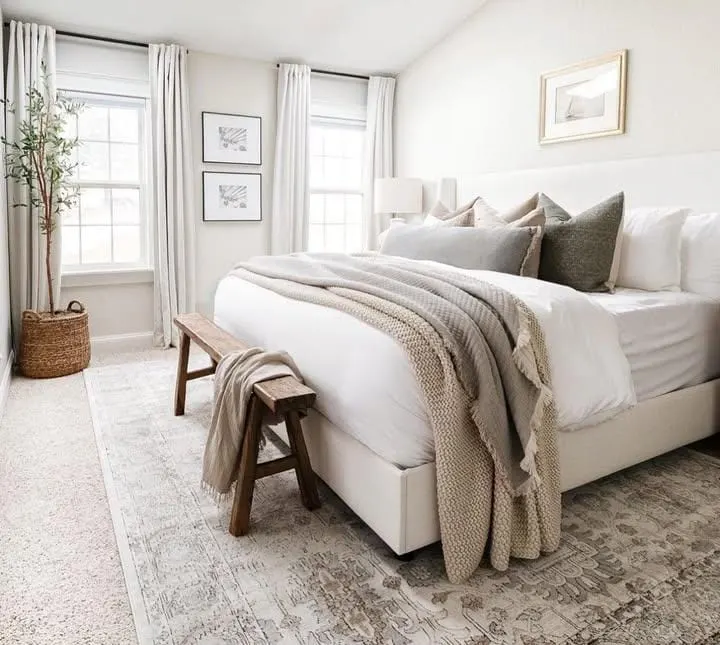
Materials/Tools: White sheer linen panels, heavier grey blackout curtains, curtain rods (extendable), rings or hooks, measuring tape, step ladder.
Step-by-step instructions (12 lines):
- Measure window width and hang rods 6–12 inches above the frame to create height.
- Install an inner rod for sheers and an outer rod for blackout curtains if possible.
- Hem or adjust lengths so sheers barely touch the floor and blackout curtains puddle slightly or skim the floor.
- Hang white linen sheers on the inner rod and spread them evenly for soft diffusion.
- Mount the grey blackout panels on the outer rod for privacy and light control.
- Use clip rings for easy opening and closing.
- Tie back panels with simple grey fabric ties during the day for a layered look.
- Steam or iron curtains to remove creases before hanging.
- Add a subtle valance or leave rods exposed for a modern feel.
- Place a narrow bench or plants beneath the window to complement the treatment.
- Adjust rod height for proportionality depending on ceiling height.
- Ensure fabric weights are balanced to avoid curtain sag.
Benefits (6 lines):
Layered linen and grey curtains balance softness with functionality. Sheers keep daylight gentle and the room luminous while greys provide darkness for sleep. The texture of linen brings a lived-in, Scandinavian calm. This scheme introduces architectural height visually. It’s flexible for seasons and conflicts between privacy and light. Overall, it contributes to a restful, cultivated bedroom.
3. Two-Tone Painted Accent Wall

Materials/Tools: Painter’s tape, two shades of grey paint (light and dark), primer, roller, angled brush, drop cloth, level, pencil.
Step-by-step instructions (12 lines):
- Decide on the wall behind the bed as your accent surface.
- Choose a lighter grey for the upper portion and a darker tone for the lower or vice versa.
- Measure and mark the transition line at a height that complements your headboard.
- Use a level and pencil to draw a straight guideline across the wall.
- Apply painter’s tape along the guideline to protect the lower section.
- Prime the wall if needed for even coverage, especially over previous colors.
- Paint the first color with a roller and tidy edges with an angled brush.
- Allow the coat to dry thoroughly before applying the second color.
- Remove tape carefully after paint is dry to avoid peeling.
- Touch up any bleed-through with a small brush.
- Add molding or a slim picture ledge along the transition if desired.
- Style the bed and artwork to play with the two tones coherently.
Benefits (6 lines):
A two-tone wall introduces architectural interest without heavy decor. It visually anchors the bed and adds modern chic. The contrast emphasizes lines and scale, making ceilings appear taller or walls longer. It’s cost-effective compared to full re-cladding. This technique pairs well with monochrome bedding. It allows subtle variation without breaking the grey-and-white theme.
4. Tufted Grey Headboard DIY

Materials/Tools: 36–60″ plywood panel, batting, upholstery foam, grey upholstery fabric, tufting buttons or fabric-covered buttons, upholstery staples, staple gun, measuring tape, drill, marker.
Step-by-step instructions (12 lines):
- Cut plywood to desired headboard dimensions and sand edges smooth.
- Layer upholstery foam on the plywood and glue it in place evenly.
- Cover foam with a layer of batting for soft rounding; staple along the back edges.
- Mark tuft points in a grid pattern using a ruler and marker.
- Drill small holes at each tuft point through the plywood to thread the tufting buttons.
- Prepare fabric by laying it flat and centering the plywood on top.
- Pull fabric tightly and start securing with the staple gun at the back.
- Use a long upholstery needle and strong thread to pull buttons through fabric, foam, and plywood.
- Secure buttons at the back with washers or a tufting kit for stability.
- Trim excess fabric and add a clean backing board to hide staples.
- Install brackets on the wall or mount directly to bed frame.
- Add side trims or piping for a polished finish.
Benefits (6 lines):
A tufted grey headboard creates a luxe hotel look with personal craftsmanship. It adds softness and vertical drama to the room. The tufting pattern introduces texture without color shifts. DIY control lets you size, depth, and fabric choice match the room perfectly. This headboard is an economical way to make a big design impact. It anchors the bed as the bedroom’s focal point.
5. White Shiplap Behind Bed

Materials/Tools: Shiplap boards or tongue-and-groove panels, finishing nails, nail gun, paint (white), stud finder, measuring tape, level, saw.
Step-by-step instructions (12 lines):
- Locate and mark studs across the feature wall for secure nailing.
- Prime and paint shiplap boards if you prefer pre-finish.
- Measure the wall height and cut planks to the correct lengths.
- Begin installation at the bottom and work upward for a clean reveal.
- Slot each board into the previous tongue or overlap for the shiplap reveal.
- Nail each board into studs using a nail gun for a flush finish.
- Stagger end joints for visual balance across the wall.
- Fill nail holes with white wood filler and sand lightly when dry.
- Seal corners and edges with caulk for a refined look.
- Touch up with paint where necessary after sanding.
- Style the bed and bedside with minimal items to let shiplap read clearly.
- Maintain with periodic dusting and a gentle wipe down.
Benefits (6 lines):
White shiplap brings classic coastal warmth and subtle texture to a neutral bedroom. It frames the bed with architectural detail that feels curated and cozy. Shiplap’s horizontal lines lengthen the room visually. It’s versatile — rustic raw or crisp painted depending on finish. The white keeps the palette bright while grey textiles add grounding contrast. This treatment blends tradition with current Pinterest trends.
6. Grey Wallpaper with Subtle Pattern

Materials/Tools: Wallpaper rolls, wallpaper paste (if non-peel), smoothing brush, seam roller, utility knife, level, measuring tape.
Step-by-step instructions (12 lines):
- Choose a grey wallpaper with a soft, subtle pattern like linen grain or tone-on-tone geometrics.
- Prepare walls by smoothing and priming to ensure adhesion.
- Measure vertical drops and cut wallpaper strips with a little excess at top and bottom.
- Match pattern at seams before cutting each subsequent strip.
- Apply paste evenly for pasted wallpaper or peel backing for peel-and-stick.
- Position the first strip carefully using a level as a guide.
- Smooth from center outward with a smoothing brush to remove bubbles.
- Use a seam roller to press edges gently for neat joins.
- Trim excess at ceiling and baseboard with a sharp utility knife.
- Continue with remaining strips, aligning pattern consistently.
- Wipe off any paste residue promptly with a damp cloth.
- Allow wallpaper to settle for 24 hours before styling furniture.
Benefits (6 lines):
A subtle grey wallpaper adds depth without overwhelming a tranquil palette. Patterns provide interest that reads differently at varied distances. Wallpaper conceals minor wall imperfections and elevates the room’s perceived craftsmanship. It harmonizes with white trim and bedding for a layered neutral look. This choice yields a high-design feel with minimal color complexity. It’s a simple way to make the walls themselves feel intentional.
7. Monochrome Gallery Wall
Materials/Tools: Assortment of black-and-white prints or photos, matching frames in white or grey, picture-hanging kit, measuring tape, pencil, level.
Step-by-step instructions (12 lines):

- Collect a range of black-and-white prints and photographs with shared mood or theme.
- Lay frames on the floor to test various groupings and arrangements.
- Decide on a central anchor piece to build around visually.
- Measure wall space and mark the central line at eye level.
- Start hanging from the central piece outward to maintain balance.
- Use matching spacing between frames for a cohesive grid or vary spacing for an organic cluster.
- Ensure consistent frame heights when aligning the top or center lines.
- Use picture hangers rated for the frame weight for safety.
- Keep artwork at a comfortable viewing height above furniture.
- Consider adding one or two small sculptural pieces for mixed media interest.
- Dust frames regularly and avoid direct sunlight to preserve prints.
- Update prints seasonally or as your collection grows.
Benefits (6 lines):
A monochrome gallery wall provides personality without breaking the grey-and-white color scheme. It becomes a personal museum of memories and tastes. Black-and-white imagery adds timeless sophistication and reduces visual noise. Framed art creates rhythm and visual storytelling for the bedroom. The cohesive palette helps the display feel curated rather than chaotic. This option is inexpensive but high-impact for styling.
8. Marble-Look Nightstands

Materials/Tools: Small nightstands, marble-look contact paper or veneer, utility knife, squeegee, measuring tape, clear sealant.
Step-by-step instructions (12 lines):
- Measure the top surface of your nightstands to determine contact paper dimensions.
- Clean and sand the surface lightly so the adhesive grips well.
- Cut marble-look contact paper slightly larger than the surface to allow wraparound.
- Peel backing and position the paper at one edge, slowly smoothing with a squeegee.
- Work outward to prevent air pockets and ensure even adhesion.
- Trim excess paper with a utility knife for clean edges.
- Wrap sides neatly and press into corners firmly.
- Apply a clear sealant or varnish if desired for extra protection.
- Add minimal hardware if necessary to match the grey-and-white palette.
- Style with a slim lamp and small tray for essentials.
- Maintain with a damp cloth and avoid harsh chemicals.
- Replace or update veneer when worn for a refreshed look.
Benefits (6 lines):
Marble-look nightstands add a touch of luxury without heavy expense. The light grey veining complements white sheets and darker greys in throws. This surface reflects light subtly and elevates bedside styling. It pairs well with brass or matte black lighting for contrast. The DIY veneer is quick and reversible for renters. Overall, it imbues sophistication while remaining practical.
9. Minimal Floating Shelves
Materials/Tools: Slim floating shelf brackets, painted wood shelves in white or grey, screws, drill, level, stud finder.
Step-by-step instructions (12 lines):
- Select slim shelves in tones that match your room’s grey palette.
- Use a stud finder to locate secure mounting points for weight-bearing shelves.
- Mark shelf height and ensure consistent spacing if installing multiple.
- Install hidden brackets securely into studs with appropriate screws.
- Slide shelves onto brackets and confirm level alignment.
- Place a small stack of books on one side for balance.
- Add a plant or sculpture to the opposite side to create visual tension.
- Keep objects minimal to maintain the airy feel of the shelf.
- Rotate decorative items occasionally to avoid dust build-up.
- Combine white and grey elements for layered monochrome interest.
- Use small picture frames to personalize the floating display.
- Avoid overcrowding; let negative space breathe around objects.
Benefits (6 lines):
Floating shelves maximize wall space while keeping the room airy. They provide chic display areas for essentials and small décor. Their minimal silhouette matches modern grey-and-white schemes perfectly. These shelves create vertical lines that can elongate walls visually. They’re adaptable to both practical storage and aesthetic display. The look is clean, functional, and easily updated.
10. Soft Area Rug Layering
Materials/Tools: Large base rug in neutral grey, smaller textured white or cream rug, rug pad, vacuum, measuring tape.
Step-by-step instructions (12 lines):
- Measure your bedroom layout to determine rug sizes for under-bed and seating areas.
- Place a larger grey rug under the bed so that it extends beyond the frame on all sides.
- Add a smaller white textured rug at the foot of the bed or beside it for softness.
- Use rug pads beneath both layers to prevent slipping and extend rug life.
- Align rug edges so the layering looks intentional and balanced.
- Choose rug fibers that match foot comfort needs — wool for warmth, flatweave for modernity.
- Rotate rugs periodically to even out wear and sun exposure.
- Brush or vacuum rugs according to fiber care instructions.
- Pair rug textures with bedding textures for cohesive layering.
- Keep surrounding floor visible at edges to frame the rugs.
- Consider a runner beside the bed for a luxe hotel feel.
- Maintain small spot cleaning to preserve pristine look.
Benefits (6 lines):
Layering rugs introduces depth and tactile comfort underfoot. The grey base anchors the space while a white top layer softens the palette. Rug textures create warmth without changing color harmony. This approach helps define zones in a large bedroom. It also protects flooring and adds subtle luxury. The result is a curated, hotel-like feel that’s cozy and sophisticated.
11. Built-In Window Seat
Materials/Tools: Plywood or ready-made bench, foam cushion, grey upholstery fabric, hinges for storage top, paint, screws, measuring tape.
Step-by-step instructions (12 lines):
- Measure the window alcove width and depth precisely for a snug fit.
- Build or buy a bench base sized to the window opening with a hollow interior for storage.
- Sand and paint the base in white to blend with trim.
- Cut foam to fit the top surface and recover with grey upholstery fabric.
- Attach foam to plywood base with adhesive and staple fabric neatly underneath.
- Install hinges if you want a lift-up storage top and reinforce corners.
- Add small storage baskets inside for linens or books.
- Place layered cushions and a throw to create comfort and style.
- Consider a thin side table or floating shelf nearby for drinks and reading lamps.
- Add blackout cellular blinds behind for light control if needed.
- Maintain the seat by airing cushions and vacuuming the nook.
- Use the seat as a functional focal point for morning light and reading.
Benefits (6 lines):
A built-in window seat becomes a dreamy daytime retreat and extra storage. The white base blends with trim while grey upholstery adds sophistication. It makes efficient use of alcoves and enhances natural light enjoyment. The seat becomes a design focal and a practical perch for quiet moments. This feature increases usability for small rooms and adds architectural interest. It reads as both practical and indulgent.
12. Brass Accent Lighting
Materials/Tools: Brass wall sconces or bedside lamps, electrician tools (or electrician hire), warm LED bulbs, mounting hardware, screwdriver.
Step-by-step instructions (12 lines):
- Select brass fixtures with a warm patina to contrast the cool greys.
- Decide placement — wall sconces over bedside tables or a central pendant.
- Turn off power at the breaker before any hardwiring work.
- Install mounting plates and secure fixtures according to manufacturer instructions.
- If hardwiring, run conduit discreetly or hire a licensed electrician.
- Use warm-toned LED bulbs to balance metal coolness with inviting glow.
- Position switches or dimmers for convenient bedside control.
- Angle sconces to cast soft light onto reading surfaces without glare.
- Combine with layered lamps for flexible lighting scenes.
- Polish brass minimally to preserve lived-in warmth rather than mirror shine.
- Check fixture stability and wiring annually for safety.
- Pair lighting with white and grey textiles for elegant contrast.
Benefits (6 lines):
Brass introduces a warm metallic counterpoint to grey and white, adding richness. Lighting becomes jewelry for the room, elevating even minimal decor. The warmth of brass prevents the scheme from feeling sterile. Functionally, wall sconces free bedside table space and enhance nighttime routines. These accents increase perceived luxury without heavy cost. Overall, brass is an elegant finishing touch that humanizes a neutral palette.
13. Mirrored Wardrobe Doors
Materials/Tools: Sliding wardrobe door kit or mirror panels, measuring tape, level, drill, mounting rails, safety film (optional).
Step-by-step instructions (12 lines):
- Measure the doorway or closet opening accurately for mirror panels or sliding doors.
- Choose framed or frameless mirrored panels depending on the desired edge detail.
- Install top and bottom rails securely into studs or reinforced headers.
- Lift panels carefully and set them into the tracks per the kit instructions.
- Adjust rollers and guides for smooth sliding action.
- Apply safety film to the mirror backs if concerned about breakage.
- Clean mirrors with non-abrasive cleaner to avoid streaks.
- Dress the rest of the room in soft whites to enhance reflected light.
- Use mirrored doors to hide closet clutter while visually expanding space.
- Secure locks or soft-close features if needed for safety.
- Keep mirrors streak-free with regular maintenance.
- Ensure mirrors are firmly fixed and inspected periodically for stability.
Benefits (6 lines):
Mirrored wardrobe doors visually double space and maximize natural light. They provide functional full-length reflection for dressing and grooming. Mirrors maintain the grey-and-white palette while amplifying textures and fabrics. They can reduce the need for extra wall décor and make bedrooms feel larger. This modification is especially valuable in smaller apartments. Mirrored doors are both practical and stylistically cohesive.
14. Concrete or Plaster Accent Finish
Materials/Tools: Venetian plaster or concrete-effect paint, trowel, primer, sealer, sandpaper, safety mask, gloves.
Step-by-step instructions (12 lines):
- Select a single wall for an industrial-inspired concrete or plaster finish.
- Prime the surface to ensure adhesion of the plaster or effect paint.
- Mix plaster or concrete-effect compound per manufacturer instructions.
- Apply the first thin base coat with a trowel and let it set slightly.
- Add texture with a floating trowel in irregular motions to create depth.
- Build up subtle layers until achieving the desired richness and variation.
- Feather edges so the surface transitions naturally to adjacent walls.
- Let cure fully then sand lightly to remove sharp ridges if desired.
- Seal with a matt sealer to protect from dust and wear.
- Pair with soft white bedding to soften the industrial edge.
- Use warm lighting to bring out shadows and texture.
- Maintain by dusting gently — avoid harsh cleaners.
Benefits (6 lines):
A concrete or plaster finish adds dramatic texture and tactile interest to a grey-and-white bedroom. It creates an urban, modern edge while remaining neutral in color. The finish harmonizes with minimalist furniture and warm accents. It’s resilient and conceal flaws better than flat paint. This option adds high-design authenticity with controlled contrast. It’s ideal for rooms aiming for architecturally driven aesthetics.
15. Canopy or Draped Bed Frame
Materials/Tools: Canopy frame or ceiling hooks, light white fabric panels, grey tiebacks, measuring tape, drill, step ladder.
Step-by-step instructions (12 lines):
- Measure above the bed for canopy frame placement or hook points.
- Install a simple rectangular metal frame or ceiling hooks for fabric suspension.
- Select sheer white or soft grey panels that will drape elegantly.
- Drape fabric over the frame and allow panels to cascade at the corners.
- Secure fabric with discreet tiebacks if you want an open look during the day.
- Ensure fabric is not near any heat sources or light bulbs.
- Add fairy lights within panels for a soft glow at night.
- Keep bedding minimal to let canopy be the focal feature.
- Wash or steam fabric occasionally to maintain freshness.
- Use lightweight fabrics to avoid sagging or heavy strain on mounts.
- Balance the canopy with low-profile bedside furniture for proportion.
- Adjust drape lengths for a tailored or romantic feel as preferred.
Benefits (6 lines):
A canopy or draped bed instantly reads as romantic and luxurious while fitting the grey-and-white palette. The soft fabric introduces vertical movement and intimacy. It changes the bed into a private, cocooned retreat. Light-filtering materials maintain airiness and don’t darken the space. The look is versatile — from airy boho to refined elegance. It’s a dramatic yet approachable update for a dream bedroom.
16. Built-In Closet Organizers
Materials/Tools: Prefab closet organizer system or custom cabinetry, measuring tape, screws, drill, shelf brackets, clothing rods, drawer units.
Step-by-step instructions (12 lines):
- Empty the closet and measure interior dimensions precisely.
- Choose a system that includes adjustable shelves, drawers, and rods.
- Install track supports anchored into studs for durability.
- Assemble shelving units and secure them to wall anchors.
- Add hanging rods at two heights for shirts and long garments.
- Position drawers at a comfortable waist height for easy access.
- Include pull-out shoe racks or baskets for small items.
- Add LED strip lights within the closet for visibility.
- Use matching grey or white cabinet faces to maintain palette continuity.
- Label storage baskets for seasonal rotation and ease.
- Keep daily items at eye level for convenience.
- Periodically declutter to keep the system effective.
Benefits (6 lines):
Built-in closet organizers maximize storage and reduce visual clutter in a serene grey-and-white bedroom. They keep surfaces clear so the palette reads as calm rather than messy. Organized storage supports a restful atmosphere and improves daily routines. Custom finishes integrate the closet with the rest of the bedroom design. It raises the home’s functionality and resale value. Overall, it’s a practical investment for peace and order.
17. Statement Ceiling Paint
Materials/Tools: Ceiling paint in soft grey or high-contrast white, roller with extension, painter’s tape, drop cloth, ladder.
Step-by-step instructions (12 lines):
- Clean ceiling surface and patch any cracks before painting.
- Choose either a soft grey for subtle drama or bright white for contrast with grey walls.
- Tape off crown moldings and upper edges to protect walls.
- Use a roller with extension for even coverage and to reduce strain.
- Apply two thin coats rather than one heavy coat for a smoother finish.
- Allow adequate drying time between coats as recommended.
- Remove tape while paint is still slightly tacky to avoid peeling.
- Reinstall light fixtures carefully after paint fully cures.
- Consider painting a small ceiling medallion in a complementary tone for detail.
- Pair the ceiling tone with coordinated bedding or drapery for a cohesive palette.
- Ensure proper ventilation during painting for safety and drying.
- Maintain by dusting ceiling corners periodically to avoid cobwebs.
Benefits (6 lines):
Painting the ceiling changes how the entire room feels by shifting perceived height and ambience. A soft grey ceiling adds intimacy and a cocooning effect while keeping the scheme monochrome. A white ceiling paired with grey walls brightens and lifts the space. This relatively simple update yields architectural refinement and completes the layered look. It ties the palette together from top to bottom. The ceiling becomes another canvas for design intention.
18. Scandinavian Dressing Corner
Materials/Tools: Slim clothing rack or wardrobe, full-length mirror, small bench in grey, pendant or floor lamp, minimal hangers.
Step-by-step instructions (12 lines):
- Choose a corner with natural light to set up your dressing nook.
- Position a slim clothing rack or open wardrobe for daily outfits.
- Hang a full-length mirror adjacent to the rack for quick checks.
- Place a small grey bench to sit while putting on shoes.
- Add a pendant light above or a floor lamp for focused illumination.
- Use uniform wooden hangers to maintain a tidy visual.
- Display a limited rotation of favorite garments for easy selection.
- Incorporate a small tray for jewelry and accessories on the bench.
- Keep the corner uncluttered to preserve the Scandinavian ethos.
- Rotate seasonal items to keep the space functional and fresh.
- Use light whites and greys to keep the area cohesive with the room.
- Maintain with weekly tidy-ups to ensure it remains a pleasure to use.
Benefits (6 lines):
A Scandinavian dressing corner prioritizes calm routines and efficient styling. It supports minimalist living by highlighting only daily essentials. The grey bench and white rail keep the palette airy and cohesive. This planning minimizes morning chaos and increases outfit visibility. The corner functions as both utility and design feature. It’s ideal for small spaces where a full dressing room isn’t feasible.
19. Textured Throw Wall Hanging
Materials/Tools: Macramé or woven wall hanging in white and grey tones, wooden dowel, hook, measuring tape.
Step-by-step instructions (12 lines):
- Choose a wall hanging that balances white and multiple grey tones for depth.
- Measure placement above the bed or a side wall so it hangs at eye level.
- Install a single sturdy hook or wall anchor to support the weight.
- Hang the wooden dowel and ensure the piece is level and centered.
- Fluff fringe and straighten woven sections for polish.
- Pair with simple framed prints nearby if desired for layered texture.
- Keep nearby surfaces minimal to allow the textile to read clearly.
- Spot clean per care instructions to maintain fiber quality.
- Rotate or change hangings seasonally for freshness.
- Use warm ambient light to bring out shadow and weave detail.
- Consider smaller companion hangings to create a trio if space allows.
- Enjoy the tactile softness it introduces to the room’s vertical plane.
Benefits (6 lines):
A textured wall hanging adds tactile richness without changing the color scheme. It introduces handcrafted warmth that modern greys sometimes lack. Wall textiles absorb sound, improving acoustics for a restful bedroom. The piece becomes a feminine or boho counterpoint within a minimalist setting. It’s lightweight, renter-friendly, and highly customizable. This detail makes the room feel cozy and intentional.
20. Integrated Sconce + Shelf Units
Materials/Tools: Wall-mount sconce with integrated shelf or separate sconce plus floating shelf, screws, drill, level, warm LED bulbs.
Step-by-step instructions (12 lines):
- Choose sconces with small integrated shelves or pair a sconce with a slim floating shelf below.
- Measure and mark the height so the light hits at reading level while the shelf holds essentials.
- Install electrical wiring or use plug-in sconces if hardwiring isn’t feasible.
- Mount the shelf securely into studs to support nightly items.
- Position sconces so light is focused downward for bedside reading.
- Style shelves with a small tray, book, or eyeglass dish for functionality.
- Keep items minimal to prevent clutter on the bedside surface.
- Use warm LED bulbs to complement grey textiles with a cozy glow.
- Ensure switching is easily reachable from bed for convenience.
- Check load-bearing capacity of the shelf for heavier objects.
- Maintain by dusting the shelf and checking bulb integrity.
- Balance both sides of the bed with identical units for symmetry or contrast with one statement piece.
Benefits (6 lines):
Integrated sconce-and-shelf units maximize bedside efficiency in sleek style. They keep surfaces clear while delivering practical lighting and storage. The metal finish or white/grey materials integrate smoothly into the palette. This solution is ideal for small bedside tables or minimalist setups. It provides tailored functionality without sacrificing design. The result is a refined, uncluttered bedside experience.
Conclusion
A grey-and-white bedroom is a quiet canvas that rewards careful attention to texture, proportion, and light. Each idea above offers a straightforward path to elevating your space — from tactile bed layers to architectural ceilings, from built-in storage to handcrafted textiles.
Mix and match these projects to reflect your daily rituals, your favorite materials, and the level of comfort you crave. Save this guide to your favorite board, try one small project this weekend, and watch how subtle changes add up to a sanctuary you’ll never want to leave. If you want, I can convert any of these ideas into printable shopping lists or week-by-week project plans to help you make the room truly yours.